League of Legends Live Match API for Match-Day Apps
Track active LoL esports matches, series score, completed games, current game IDs, and player stats as data becomes available. Use REST while the match is active and webhooks on paid plans for cleaner production updates.
500
free monthly test requests
$25
starter production tier
REST + hooks
polling now, webhooks when paid

Built for speed
Instantly query live, schedule, team, and player data from one API.
Networked data
Connect players, teams, matches, earnings, transfers, and org history.
Live API
Track matches on the go with endpoints built for match-day products.
Key security
Only authenticated requests can access your account and usage limits.
Schedule integration
Keep track of upcoming series, leagues, tournaments, and match windows.
Webhooks
Send production updates to bots, dashboards, and internal workflows.
Instant capture
Save the exact endpoint response your app needs and iterate quickly.
Frictionless search
Recall players, teams, standings, history, and match records without scraping.
League data with an
AI assistant
Use the assistant to choose endpoints, explain response shapes, and turn LoL esports data into product-ready notes.
Which endpoint powers a live match center?
-Start with /api/v1/lol/live, then fetch series and game stats.
What can you do with CitoAPI AI?
Summarize player form
Turn recent match data into readable scouting notes.
Generate endpoint plans
Map a product idea to the exact API calls it needs.
List key takeaways
Pull action items from schedules, rosters, and stats.
Chat with your data
Ask what changed across teams, players, and leagues.
Save custom prompts
Keep repeat workflows for bots, dashboards, and research.
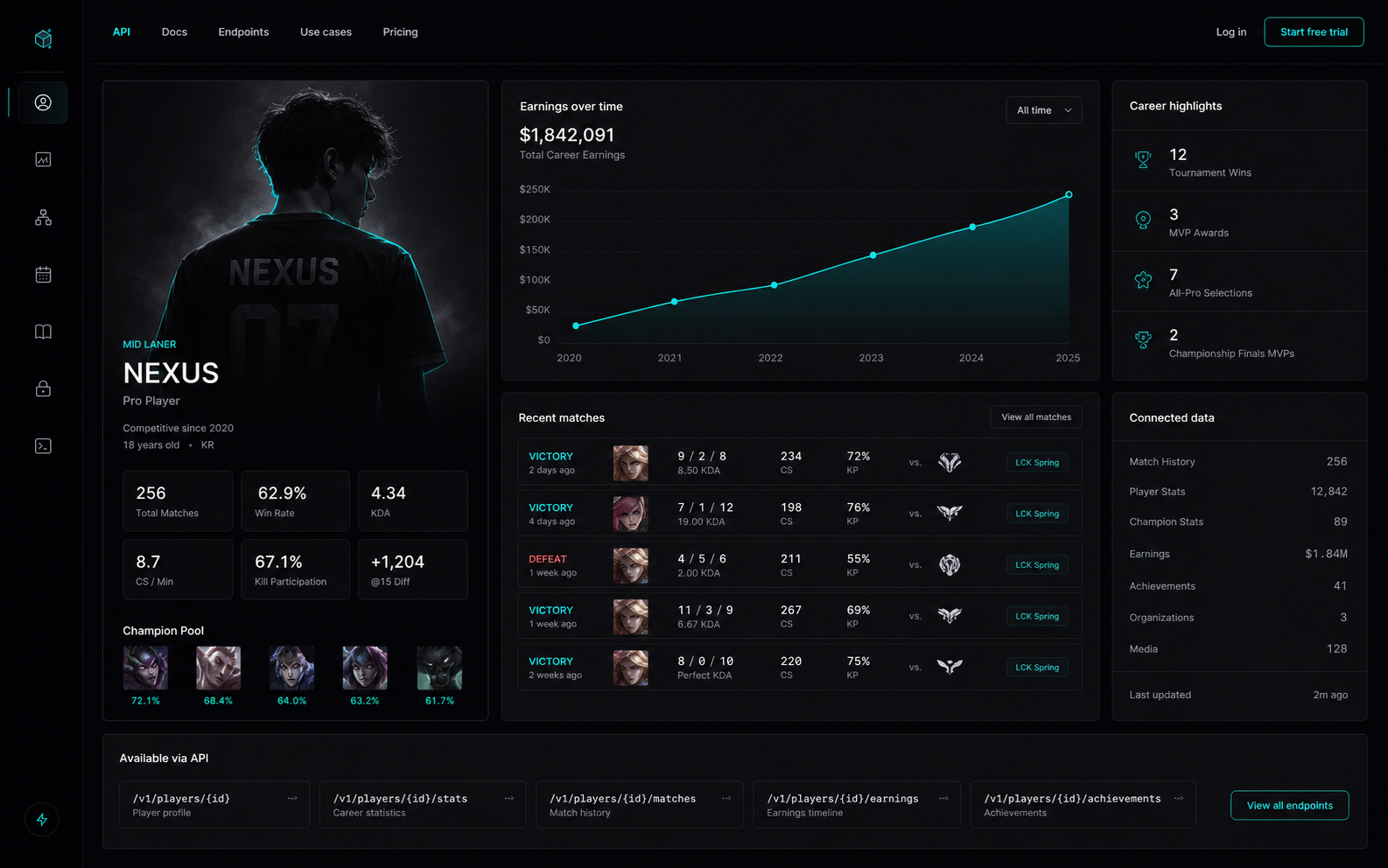
Never lose the story behind a player
Developers do not just need a schedule endpoint. CitoAPI keeps searchable player profiles, headshots, role metadata, earnings summaries, tournament rows, career achievements, and match history in reach.
$1.92M
tracked winnings
80
tracked events
30
1st place finishes
63
top 3 finishes
Everything your LoL product needs, connected
Keep the workflow close to the product: discover the live match, open the series, pull the game rows, then ship the screen.
curl "https://api.citoapi.com/api/v1/lol/live" \
  -H "x-api-key: YOUR_API_KEY"
{
"success": true,
"data": [
{
"matchId": "lol-match-2026-05-15-001",
"league": "LCK",
"state": "in_game",
"bestOf": 5,
"score": { "blue": 2, "red": 1 },
"currentGameId": "lol-game-2026-05-15-001",
"statsAvailable": true,
"recommendedNext": "/api/v1/lol/live/{matchId}/series",
"webhookEvents": ["lol.score.updated", "lol.live_game.updated"]
}
]
}/api/v1/lol/liveList currently live LoL esports matches
/api/v1/lol/live/{matchId}Live match details by match ID
/api/v1/lol/live/{matchId}/seriesSeries-level state with completed/current games
/api/v1/lol/live/{matchId}/statsStats for a live or recently completed game
/api/v1/lol/games/{gameId}Game details by stored or esports game ID
/api/v1/lol/webhooks/eventsWebhook event list for paid plans
Polling and webhooks should work together.
The public API is REST-first so anyone can test quickly. Paid webhook support is the upgrade path for products that need cleaner event-driven updates without hammering endpoints.
During the match
When state changes
After the game
League of Legends API questions
Is the LoL live API frame-level?
No. CitoAPI focuses on live match state and game/event-level data, not continuous raw frame-by-frame HP telemetry.
Can webhooks fire for LoL match events?
Yes. Paid plans can use webhooks for LoL events such as match started, match completed, score updated, standings updated, and live game updates. The public API remains REST-first; webhooks are the production upgrade path.
Does CitoAPI provide a LoL websocket stream?
Not today. The LoL product is REST-first with paid webhook support for push-style production updates. Use REST polling during free testing, then move webhook workflows to production when needed.
How should I avoid over-polling live matches?
Use /lol/live to discover active matches, poll match or stats endpoints during match windows, and use webhooks on paid plans for cleaner event-driven updates.
Build the match center before the next draft starts.
Create a free key, test live scores, schedules, rosters, and post-game stats, then upgrade only when your League product needs production volume.